

Artificial intelligence has become remarkably good at drafting contracts, summarizing documents, preparing demand letters, and answering legal questions. It is fast, inexpensive, and available at 11:30 p.m. when your lawyer may not be. That does not mean it should be your lawyer.

The commercial transportation industry continues to operate in an increasingly challenging legal environment. Between expanding federal regulations, larger jury awards, emerging vehicle technologies, and ongoing workforce shortages, motor carriers face significant exposure both on the road and in the courtroom.
Companies that prioritize compliance, documentation, and proactive risk management are often in a stronger position when claims arise. Below are several developments transportation companies should have on their radar in 2026.

Dirt is easy to buy. Buildable dirt is harder. A parcel can have the right location, the right acreage and an attractive price—and still turn out to be a very expensive place to grow weeds. That is why the due diligence period in a commercial land acquisition matters. The question is not simply whether you can buy the property. It is whether you can actually do what you intend to do with it after you own it. Before falling in love with a piece of land, here are five things worth understanding.
-
Receiving notice that a complaint has been filed against you with the Virginia Board of Veterinary Medicine is unsettling. For many veterinarians, it is the first time their professional competence has been formally questioned, and the natural reactions range from panic to anger to denial. None of those reactions serve you well. What does serve you is understanding the process, knowing what is at stake, and engaging qualified counsel early.
-
The 2026 Virginia legislative session produced several significant changes to landlord-tenant law. If you own or manage rental property in Virginia, three new bills demand your immediate attention. Two took effect July 1, 2026, and one takes effect July 1, 2027, but all three require you to update your processes, notices, and lease language now.

A new Virginia law (Va. Code § 15.2-2292.4) will require localities to allow accessory dwelling units, or ADUs, in single-family zoning districts starting July 1, 2027. For existing associations, the next twelve months present a key window. Associations that want to restrict ADUs should review their declarations and related governing documents well before the law takes effect. If the documents are silent, and the association wants to address ADUs expressly, amendment is necessary. Developers planning new communities should also consider whether ADU restrictions should be addressed in the original recorded covenants.

Sands Anderson is pleased to announce it has moved to a new office in Durham, North Carolina.
The firm’s attorneys and legal professionals in Durham now occupy space at 4505 Emperor Boulevard, Suite 250, Durham, N.C. 27703. The new location offers expanded square footage and additional meeting spaces to accommodate the firm’s growing team. It also features modernized conference rooms and state-of-the-art technology, along with collaborative workspaces designed to support client service and team connectivity within a refreshed, contemporary environment.

A new Virginia law could make it easier to finance affordable housing by allowing local industrial and economic development authorities (“EDAs”) to issue bonds for housing projects even in cities and counties that already have housing authorities. Governor Spanberger signed House Bill 806 into law on April 6, 2026. The measure amends Virginia Code §§ 15.2-4901 and 15.2-4902 and expands the number of public entities that can serve as conduit issuers for single-family and multifamily affordable housing developments across the Commonwealth.

United States intellectual property law (known as “IP” law) is a three-legged barstool consisting of patents (protecting new and useful inventions), trademarks (protecting brand names, logos, and slogans), and copyrights (protecting works of original authorship). Today, we focus on copyright protection under United States law and, in particular, copyright protection of architectural drawings and works. But first, a few copyright basics.

According to data from Epiq AACER, commercial Chapter 11 filings in January 2026 increased 76% over filings recorded in January 2025. Small business filings under Subchapter V have also seen a jump in Q1 of 2026.
For the businesses on the other side of those filings, one day you have a customer, a tenant, a borrower, a project partner. The next, you have a proof of claim deadline, a frozen collection effort, and decisions to make that will determine whether you recover anything at all.

Virginia’s 2026 legislative session brought a familiar refrain: Many of the same employment bills we’ve tracked in the last few years returned for another attempt. It also delivered some brand new bills that employers should not ignore. Whether vetoed, passed, or positioned for future success, these bills collectively signal the future in Virginia employment law—more expansive rights for employees.

Several changes to Virginia eminent domain law are now in effect following the General Assembly’s 2025 reform package. Most provisions took effect July 1, 2025, while certain requirements – such as the updated title production requirements – apply to offers made on or after January 1, 2026. Those statutory changes are already affecting acquisition timing, disclosure obligations, and cost exposure, while recent decisions from the Virginia Supreme Court and the Fourth Circuit continue to refine the limits of condemnation authority and valuation evidence.
-
The recent Morgan v. City of Norfolk decision provides a detailed look at how Virginia courts approach inverse condemnation claims tied to multi-phase construction projects. The Court’s analysis offers practical lessons on proof of causation, the limitations of the stabilization doctrine, valuation of temporary takings, and fee recovery. These insights are valuable for localities and practitioners navigating similar issues in ongoing or future public projects.

The holidays are a time to reminisce, celebrate the many joys of the season, and spend time with your loved ones. If you are like me, you plan months in advance for the season. Lists are made and checked twice. Amid all that planning, one list rarely gets the attention it deserves: the estate plan.

Earlier this month, the Supreme Court of Virginia issued an Opinion in Brooks-Buck v. Wahlstrom, No. 250246 (Oct. 16, 2025), that clarifies the scope of legislative immunity for school board members. The Opinion also serves as a cautionary reminder to school board members that the immunities they enjoy are not limitless.

In Blair v. Appomattox County School Board, the Fourth Circuit Court of Appeals reiterated how educators are judged under Title IX when responding to peer-on-peer sexual harassment allegations. The Court said it is not enough for administrators to simply show that they took some action. Instead, their efforts must be “reasonably calculated” to stop the harassment. As such, schools should be prepared to show that they took specific, concrete steps in response to claims of sexual harassment.

Sands Anderson PC is pleased to announce that 33 lawyers have been selected by their peers for inclusion in the 2026 edition of Best Lawyers in America® and Best Lawyers: Ones to Watch.
-
General contractors who contract with owner/developers and who construct large, complex projects such as office buildings, shopping centers, and warehouses, often seek to shift the risk of owner/developer non-payment to their lower-tier subcontractors, such as mechanical, electrical, and plumbing subcontractors. Historically, general contractors achieved this goal by utilizing in their subcontracts a contractual risk-shifting provision known as a “pay-when-paid” contract clause (sometimes known as a “pay-if-paid” clause).

Employers often ask: “How long do I have to hold a job open for someone on extended medical leave?” The Fourth Circuit recently tackled this issue in Coffman v. Nexstar Media, offering helpful guidance for navigating ADA and FMLA obligations.
-
The U.S. Supreme Court recently ruled that a school division’s use of LGBTQ+-inclusive storybooks without allowing parental opt-outs unconstitutionally burdened religious freedom. This decision raises significant questions for school divisions nationwide, potentially opening the door to increased litigation and forcing districts to reconsider how they balance inclusive curricula with religious accommodations.
-
As purchasers of goods and services, many community associations have felt the impact of recent inflation and rising prices. While prices have continued to rise, community associations still must discharge the maintenance and caretaking responsibilities they are required to perform under their governing documents. Community members often resist annual assessment increases and special assessments forcing community associations to manufacture creative solutions to issues surrounding rising prices. Community associations looking for creative solutions to these issues have a couple key avenues they can consider pursuing.

Effective July 1, 2025, Virginia is implementing several key changes affecting real estate transactions, land use approvals, local governance, and secured lending. Below is a comprehensive overview of what’s changing – and how those changes may impact your real estate interests and business operations.

Each year, Sands Anderson publishes a Virginia Employment Law Pocket Guide. Written for employers and HR professionals, this guide summarizes key Virginia statutes and employment law principles to help you navigate sensitive employment situations and avoid liability. The updated pocket guide outlines what Virginia employers need to know to comply with employment laws and avoid liability in 2025.

Sands Anderson PC has completed a merger with Frieden Seery Nuckols & Hahn P.C., a leading real estate, corporate, and estate planning firm in Virginia Beach. The combined Sands Anderson firm now has more than 80 lawyers across six offices in Virginia and North Carolina, including Virginia Beach.
-
Thinking about selling your business or a piece of real estate? You’ll likely need to start with a Letter of Intent (LOI), so it is important to know the basics before you dive in.

Sands Anderson PC today announced the firm’s 2025 three-member board of directors will be Jeffrey H. Geiger to serve as President, W. Ashley Burgess to join the board, and Brian R. Pitney to continue service.

Sands Anderson is pleased to announce that it has achieved Midsize Mansfield Certification Plus for the 2023-2024 year. The achievement is the result of a year-long collaboration with Diversity Lab to track, measure, and achieve diversity and advance inclusive practices in law firm leadership.

Sands Anderson PC is pleased to announce that 32 lawyers have been selected by their peers for inclusion in the 2025 edition of Best Lawyers in America® and Best Lawyers: Ones to Watch. In addition, attorney Andrew R. McRoberts, who has been recognized by Best Lawyers for the past 10 years, was named Best Lawyers 2025 Lawyer of the Year in the Litigation – Municipal Law category.
Insights, News & Events
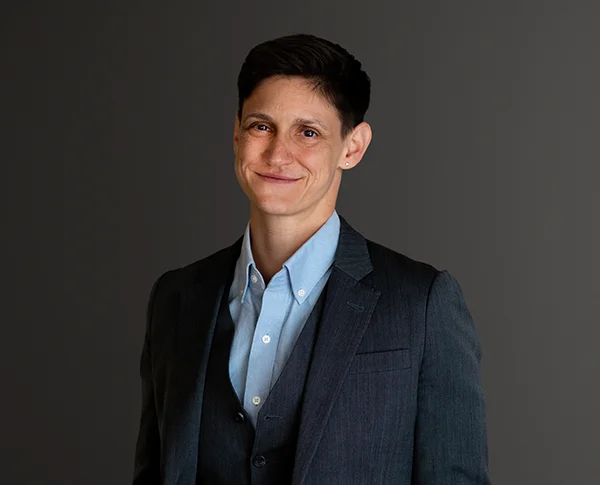 Press Releases•Attorney Lilias M. Gordon Joins Sands Anderson's Labor & Employment Team
 Event•Sands Anderson (Online)•Legal Ethics CLE Webinar - 2026
Litigation•AI Is a Great Tool. It Is a Terrible General Counsel.
Litigation•Transportation Litigation in 2026: What Carriers Should Be Watching
Commercial Real Estate•Before You Buy the Dirt: Five Things That Can Make “Developable” Land Not So Developable
Event•Sands Anderson (Online)•Legal Ethics CLE Webinar - 2026
Litigation•AI Is a Great Tool. It Is a Terrible General Counsel.
Litigation•Transportation Litigation in 2026: What Carriers Should Be Watching
Commercial Real Estate•Before You Buy the Dirt: Five Things That Can Make “Developable” Land Not So Developable Press Releases•Sands Anderson Welcomes Christine Tommasino to Talent Acquisition
 Event•Sands Anderson•Legal Ethics CLE - 2026
Litigation•You Got a Board Complaint—Don't Panic, But Don't Ignore It Either
Event•Practical Law for Civic Leaders Webinar•Implementation of the Retail Cannabis Marketplace in Virginia
Event•Sands Anderson•Legal Ethics CLE - 2026
Litigation•You Got a Board Complaint—Don't Panic, But Don't Ignore It Either
Event•Practical Law for Civic Leaders Webinar•Implementation of the Retail Cannabis Marketplace in Virginia Healthcare•Shadow AI in Healthcare: Risks, Possibilities, and a Path Forward
Litigation•What Virginia Businesses Need to Know Before Sending an Account to Collections
Healthcare•Shadow AI in Healthcare: Risks, Possibilities, and a Path Forward
Litigation•What Virginia Businesses Need to Know Before Sending an Account to Collections Press Releases•W. Ashley Burgess Named by Virginia Lawyers Weekly as a “Leader in the Law”
School & Education Law•The Supreme Court Ruled in West Virginia v. B.P.J. Now What?
Jump to PageLitigation•Virginia Residential Landlords: Three New Laws That Change How You Handle Late Rent
School & Education Law•Legislative Privilege and School Boards: Lessons from the Western District of Virginia
Event•Community Climate Collaborative•Clearing the Air: Community Choice Aggregation in Virginia
Press Releases•W. Ashley Burgess Named by Virginia Lawyers Weekly as a “Leader in the Law”
School & Education Law•The Supreme Court Ruled in West Virginia v. B.P.J. Now What?
Jump to PageLitigation•Virginia Residential Landlords: Three New Laws That Change How You Handle Late Rent
School & Education Law•Legislative Privilege and School Boards: Lessons from the Western District of Virginia
Event•Community Climate Collaborative•Clearing the Air: Community Choice Aggregation in VirginiaWe use cookies to improve your experience on our site. You may opt out of non-essential cookies below. By using our website, you agree to our Privacy Policy and Terms of Use.
Cookie Preference Center
Your Privacy
Necessary cookies enable core functionality such as security, network management, and accessibility. You may disable these by changing your browser settings, but this may affect how the website functions.
Powered by
